
HISTORY RHYMES · 1896 / 2019
A satirical cartoon from 1896 shows enormous bicycle riders forcing smaller travelers off the road. More than a century later, shared electric scooters brought familiar arguments about safety, public space and who belongs on the street.
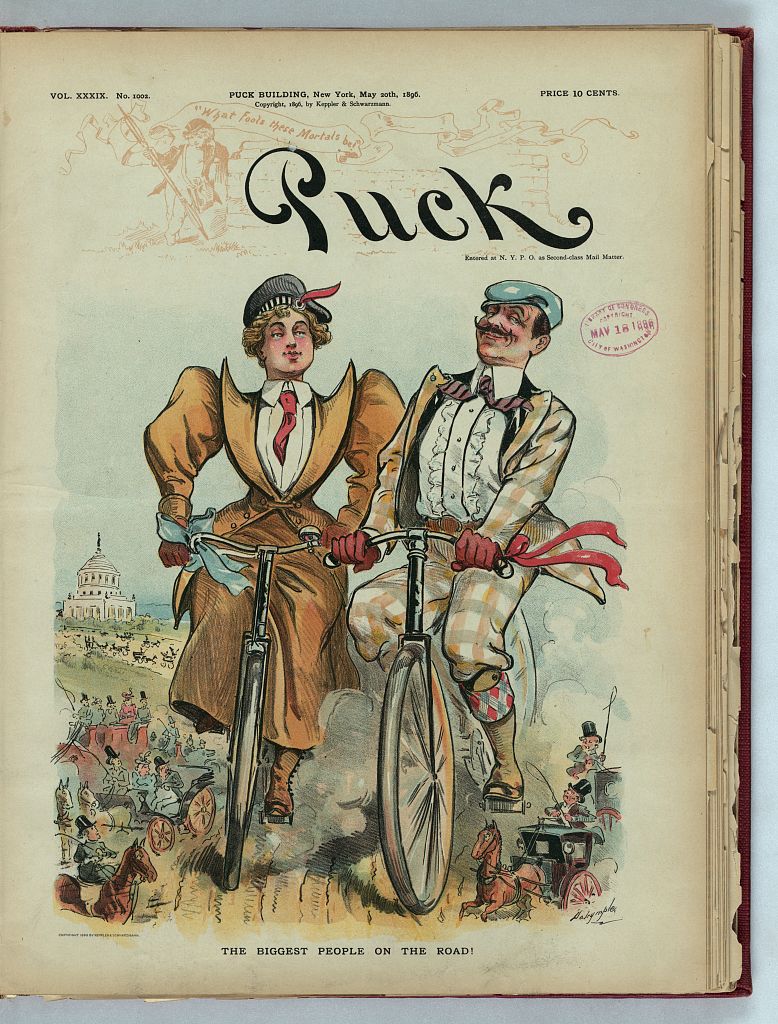
The road hogs of 1896
On May 20, 1896, the illustrated humor magazine Puck published a cartoon titled “The biggest people on the road!” Its cyclist protagonists are literally enormous, towering over the horses and wagons they displace. The exaggeration captured a real tension: the bicycle was changing the rules of public streets.
The 1890s bicycle boom was more than a recreational fad. The safer, lower bicycle with inflatable tires made independent travel newly attractive. Riders wanted roads that could accommodate them, while people accustomed to horse traffic found the new speeds and habits unsettling.
Women, in particular, found new freedom of movement. The bicycle was entangled with arguments over dress, gender and autonomy. Cycling’s opponents were not complaining only about traffic: some objected to the social changes the machine enabled.
Enter the electric scooter
In the late 2010s, rentable electric scooters spread into American cities. They were promoted as convenient solutions for short trips and as possible alternatives to automobile journeys. But parked scooters could obstruct sidewalks; riders sometimes used pedestrian space; and cities scrambled to write rules for machines that arrived before local regulations did.
A 2019 Smithsonian Magazine comparison noted the striking similarities between public anxiety about scooters and the old bicycle controversy. The similarities were most compelling around right-of-way, etiquette, and the fear of an unfamiliar vehicle.
Where history rhymes
Who owns the street? Both controversies asked who was entitled to use a shared public space and whose safety should take priority. The arrival of a new vehicle exposed rules that had previously seemed natural.
New machines, new manners. Cities had to make room for different speeds, parking habits and ideas of appropriate behavior. Some resistance was about genuine hazards; some was resentment toward change itself.
Where the comparison ends
Nineteenth-century bicycle owners generally purchased their own vehicles. Shared electric scooters introduced a different business model, with fleets owned by private companies and parked in public places. Their batteries, short-trip economics, and regulatory challenges have no exact nineteenth-century equivalent. Nor was the bicycle’s role in women’s independence simply repeated by scooters.
The broader pattern is unmistakable even if the details differ. Transportation innovations can change a city before the city decides how to govern them.
Every generation invents a new way to move—and rediscovers an old argument about getting out of the way.
Sources and further reading
- The biggest people on the road!, Puck, May 20, 1896 — Library of Congress
- Smithsonian Institution: the nineteenth-century bicycle craze
- Smithsonian Magazine: scooters and the bicycle battle, 2019
- Library of Congress: Women and Bicycles
Editorial note: The 1896 illustration is satire, not a traffic survey. This article compares social reactions to new transportation, not the vehicles’ technologies or risks.