
SOUND FAMILIAR? · 1891–1912 / THE EARLY ELECTRIC AGE
Before the modern electric-vehicle industry, American streets already hosted electric taxis, private electric cars, and experiments with battery technology. The electric car’s history is not a straight line from invention to triumph.
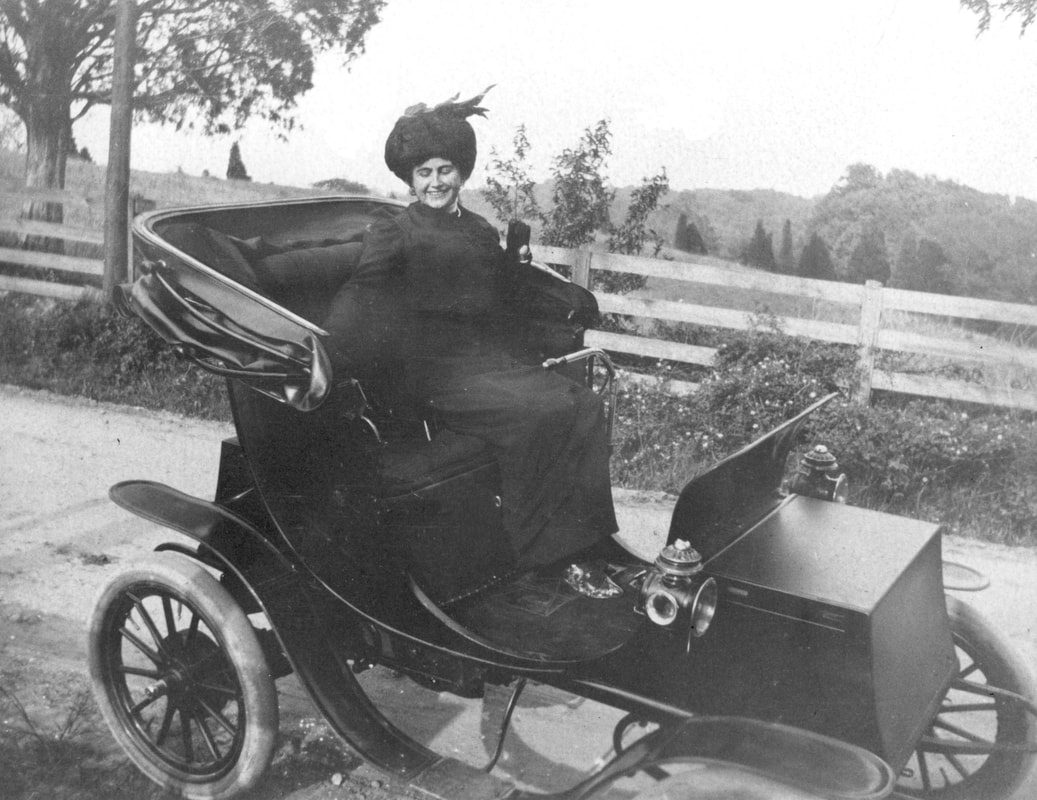
The electric future arrived early
Near the turn of the twentieth century, Americans faced a choice among three kinds of motor vehicle: steam, gasoline and electricity. The automobile itself was new, and none of the technologies had established complete dominance. Horses still carried much of everyday traffic.
Electric vehicles had attractive advantages. They were relatively quiet, easy to operate and spared occupants the smell and vibration of early gasoline motors. By 1897, electric cabs were serving New York City. The U.S. Department of Energy describes electric automobiles as accounting for roughly one-third of vehicles on American roads around 1900—an estimate describing a still-small and developing motor-vehicle market.
Electric taxis—and the problem of the battery
City taxis made electric power especially appealing, because a vehicle serving short urban trips could return to a central location for its batteries. New York’s early electric-cab operations were among the industry’s experiments in adapting a promising machine to a commercial service.
Batteries remained a weakness: their limited range and weight restricted use beyond the city. Meanwhile, gasoline automobiles became less awkward to start, especially after electric starters spread in the 1910s. Mass production, inexpensive petroleum and fueling infrastructure helped shift the market decisively toward gasoline.
Even Edison was interested
Thomas Edison worked on improved batteries for electric cars in the early 1900s. He was not alone: inventors and manufacturers saw an important market in electric propulsion. The question was never simply whether an electric car could work; it was whether it could compete in range, cost and convenience as American driving habits changed.
The roads not taken
History makes the fate of early electric cars look inevitable, but it was the outcome of technology, economics and infrastructure developing together. A quiet vehicle ideal for an urban trip was less attractive to a driver wanting to cover long distances on newly expanding roads.
The modern electric-car revival is therefore both new and old. Today’s batteries, charging systems, regulations and consumer expectations are very different. The idea of an automobile that runs quietly on stored electricity is not.
The electric car did not have to be invented twice. It had to find its moment twice.
Original sources and further reading
- Library of Congress, Early Electric Cars in America (1891–1922): historical newspaper research guide
- U.S. Department of Energy, The History of the Electric Car
- Library of Congress, historic photographs of electric automobiles and charging
- Library of Congress, early electric automobile photograph, 1904
Editorial note: The approximately one-third market estimate refers to motor vehicles around 1900, not one-third of all road traffic, which still included extensive horse-drawn transportation.