
SOUND FAMILIAR? · BUDAPEST / FEBRUARY 15, 1893
News delivered to your home in real time. Live music. Market prices. A subscription fee. This was not a 2020s media startup. It was Budapest in 1893.
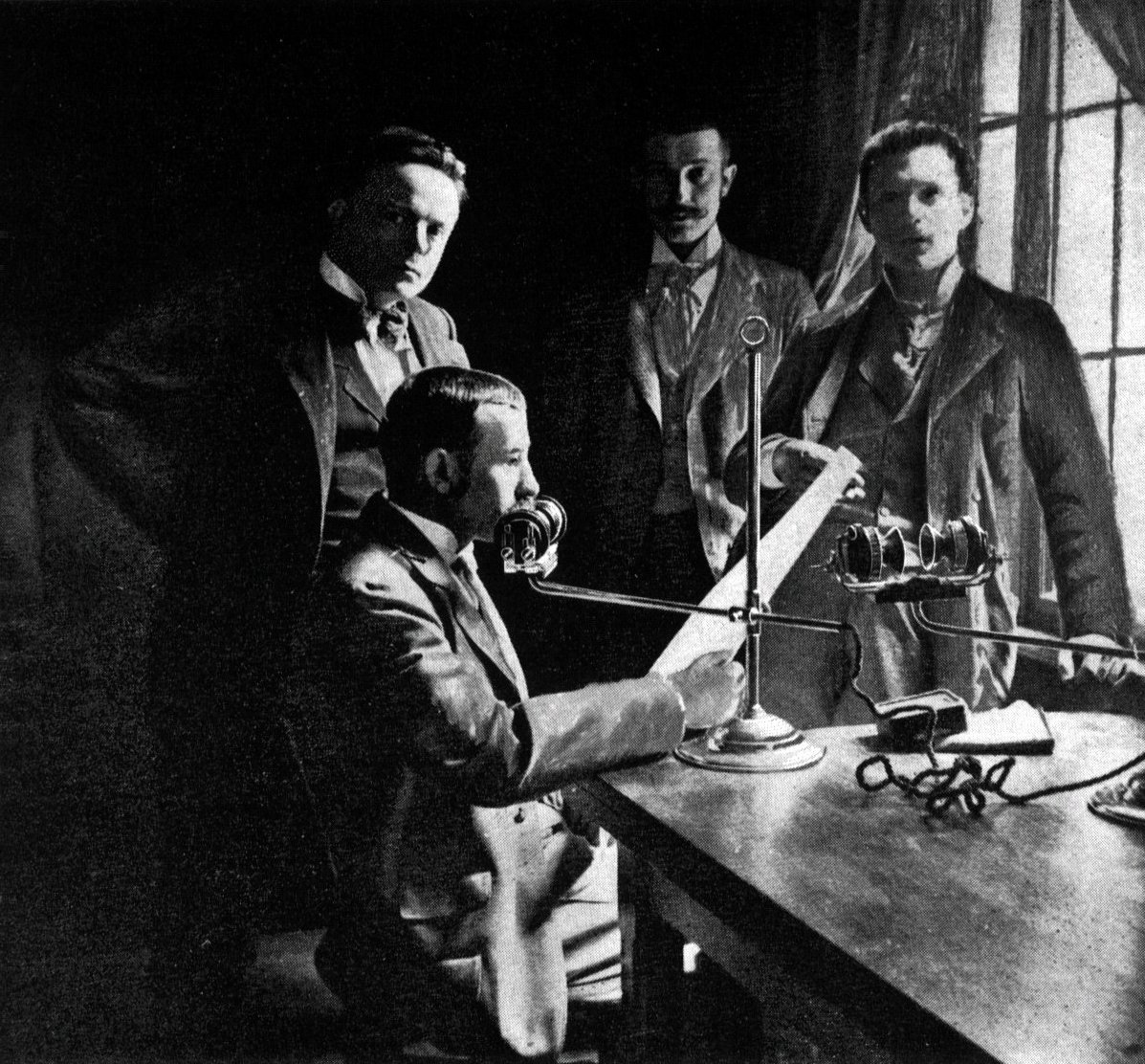

A newspaper without paper
In the Hungarian capital, inventor Tivadar Puskás launched the Telefon Hírmondó—roughly, the “Telephone Herald”—on February 15, 1893. Instead of printing an edition and dispatching carriers, the service sent spoken news over wires to listeners equipped with dedicated receivers.
In the March 18, 1893 issue of The Electrical World, an observer described a telephonic newspaper that edited breaking information at a central office before distributing it to subscribers. The reports could be heard during the working day without waiting for a printed newspaper.
A subscription to the day’s sounds
The programming did not stop at headlines. Subscribers could hear market quotations, weather, parliamentary news, concerts and opera performances. According to Hungary’s National Digital Archive, the service employed wall-mounted listening equipment and delivered performances as well as news.
A visitor writing in The World’s Work in April 1901 described an organization with editors, reporters, its own network of wires, and roughly 6,200 subscribers. The listener did not scroll a screen; the service supplied a running schedule and the household tuned in at the appropriate time.
The newspaper that sounded like tomorrow
It anticipated several recognizable features of later media: continuous news updates, subscription distribution, live entertainment relays and dedicated home receivers. But it was not the internet or a podcast. The program flowed predominantly in one direction over fixed wires, and consumers couldn’t call up any story on demand.
Broadcast radio eventually provided another way to reach mass audiences. Telefon Hírmondó adopted radio in 1925, while the earlier wired network continued until its destruction during World War II.
The medium changed. The appetite didn’t.
The enduring insight is about an audience that wanted the latest information without having to wait for the next physical edition. That demand predates smartphones, streaming platforms and even commercial radio.
It is tempting to call the Telefon Hírmondó the world’s first podcast. That would erase important differences in timing and technology. The more interesting truth is that people were already subscribing to a live spoken news feed in 1893.
The news was always on. You just had to pick up the receiver.
Sources and further reading
- The Electrical World, March 18, 1893: Telephonic News Distribution (transcribed original)
- Thomas S. Denison, The Telephone Newspaper, The World’s Work, April 1901 (contemporary first-hand report)
- Hungarian National Digital Archive: telephone history
- Puskás Tivadar technical school: historical chronology (Hungarian)
Editorial note: Terminology such as “streaming” in the headline is a modern analogy. The service distributed scheduled live audio by telephone wires, not digital data on demand.